

Hiring a software development agency is one of the most consequential decisions a founder or product leader makes. The right agency accelerates your product by months and saves you hundreds of thousands in opportunity cost. The wrong one burns your budget, delivers unusable code, and sets your roadmap back by a year.
In 2026, the agency landscape is more crowded than ever — thousands of companies promising 'world-class development' at varying price points. This guide gives you a practical, step-by-step framework for evaluating agencies so you can separate the operators from the pretenders.
Why Most Agency Hires Fail (And How to Be Different)
According to Clutch's 2025 Software Outsourcing Survey, 68% of companies are dissatisfied with their first agency hire. The most common complaints: missed deadlines, poor communication, code quality issues, and scope creep that doubled the original budget.
The root cause is almost always inadequate vetting. Founders get seduced by polished websites, impressive Dribbble portfolios, and persuasive sales calls — without verifying the agency's actual delivery track record on production projects.
The agencies that consistently deliver share a few traits: transparent pricing, direct access to engineers, documented processes, and a portfolio of live, production products you can actually use.
7 Essential Criteria for Vetting a Development Agency
Use this checklist when evaluating any software development agency:
Live Production Portfolio (Not Mockups)
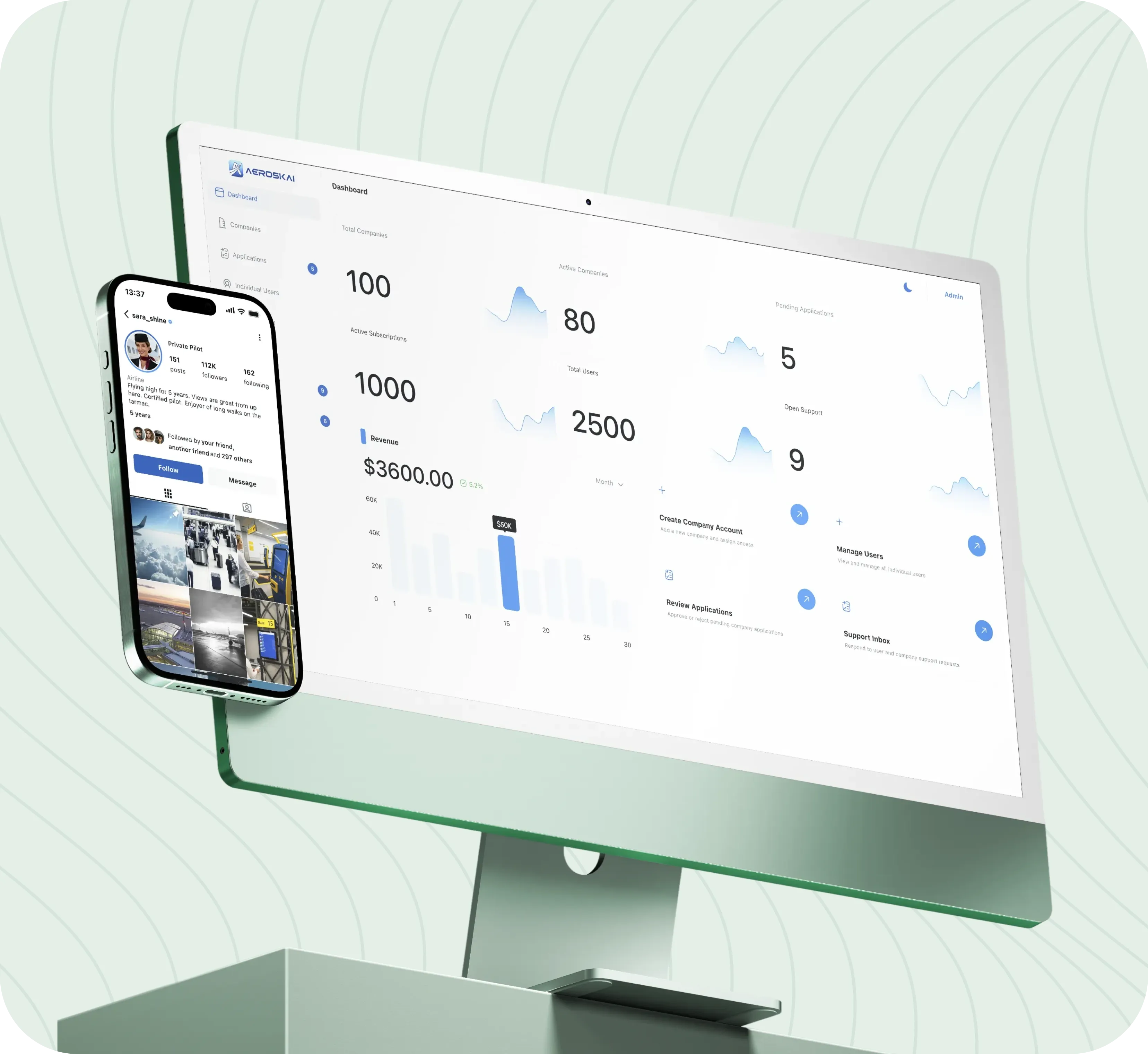
Ask for live URLs and app store links of products they've built. Visit them. Test load times, mobile responsiveness, and UX quality. Mockups and Dribbble shots prove nothing — live products prove everything.
Talk to the Actual Engineers
On the discovery call, insist on meeting the technical lead or architect who will work on your project. If you only speak with salespeople, the agency is a middleman reselling outsourced development.
Check Their Tech Stack Competency
Ask what technologies they use and why. A good agency has strong opinions about their stack (React, Node.js, PostgreSQL, Flutter, etc.) and can articulate why they chose it. Red flag: agencies that claim expertise in everything.
Request a Detailed Scope of Work (SOW)
Before committing, request a written SOW with feature list, milestone deliverables, timeline, and pricing. Agencies that refuse to provide detailed scoping are not worth your time.
Understand Their Pricing Model
Is it fixed-price milestones, hourly/T&M, or retainer? Each has tradeoffs. Fixed milestones offer the most predictability for MVPs and defined scopes.
Verify IP and Code Ownership Terms
Your contract MUST explicitly state that you own 100% of source code, design files, and IP upon payment. Any agency that retains IP rights is a non-starter.
Contact Their Previous Clients
Ask for 2-3 client references and actually call them. Ask about communication quality, deadline adherence, code quality, and whether they'd hire the agency again.
What a Quality Development Agency Should Deliver
A professional full-service development agency should provide all of these capabilities:
Product Strategy & Scoping
Feature prioritization, user story mapping, technical architecture planning, and milestone roadmap creation before development begins.
UI/UX Design & Prototyping
Wireframes, high-fidelity Figma designs, interactive prototypes, and usability testing. Design should be a separate milestone with its own review cycle.
Full-Stack Development
Frontend, backend, database, and API development using modern, maintainable tech stacks. Code should be clean, documented, and version-controlled.
Quality Assurance & Testing
Manual QA testing, automated test suites, cross-browser/device testing, and performance optimization before each milestone delivery.
Deployment & DevOps
Production deployment, SSL/security configuration, CI/CD pipeline setup, monitoring, and documentation for your infrastructure.
Post-Launch Support
Bug warranty period, performance monitoring, and ongoing maintenance options after launch.
If an agency only offers 'development' without design, QA, or deployment — they're incomplete. You'll end up managing multiple vendors, which defeats the purpose of hiring an agency.
Agency Pricing Models: Fixed vs Hourly vs Retainer
Understanding pricing models helps you negotiate fair terms and avoid budget overruns:
| Pricing Model | Best For | Risk Level | Abould's Approach |
|---|---|---|---|
| Fixed-Price Milestones | MVPs, defined-scope projects | Low (predictable budget) | ✓ Primary model — you know the cost upfront |
| Hourly / Time & Materials | R&D, exploration, undefined scope | High (budget can balloon) | Used only for discovery/scoping phases |
| Monthly Retainer | Ongoing development, post-launch | Medium (predictable but open-ended) | Available for post-launch maintenance |
| Equity / Revenue Share | Pre-revenue startups | Very High (misaligned incentives) | Not offered — cash billing only |
| Hybrid (Fixed + Retainer) | MVP build + ongoing iteration | Low-Medium | ✓ Recommended for long-term partnerships |
For most MVP and product-build projects, fixed-price milestone billing offers the best combination of predictability and accountability. Abould uses this model as our primary pricing structure.
What Software Agencies Actually Charge in 2026
Agency pricing varies dramatically by region, quality, and scope. Here are realistic 2026 market rates:
| Project Type | Typical Range | Timeline | Key Inclusions |
|---|---|---|---|
| Offshore Agency (India, Eastern Europe) | $5,000 – $25,000 | 6–16 weeks | Variable quality, communication challenges, timezone gaps |
| Nearshore Agency (Latin America) | $15,000 – $50,000 | 6–14 weeks | Better communication, similar timezones, moderate quality |
| Premium Boutique Studio (Abould) | $5,000 – $35,000 | 4–12 weeks | Senior-only teams, fixed milestones, 100% IP, direct communication |
| Large US/UK Enterprise Agency | $50,000 – $300,000+ | 12–24 weeks | Slow bureaucracy, account managers, high overhead, enterprise focus |
| Freelancer / Solo Developer | $2,000 – $10,000 | 4–12 weeks | High risk, no QA team, no design, availability uncertainty |
Price alone is a poor indicator of quality. Evaluate agencies on their process, portfolio, communication, and client references — not just their rate card.
10 Red Flags That Mean 'Run Away'
If you encounter any of these during the vetting process, walk away immediately:
They promise a complex product for an unrealistically low price ($500 for a SaaS platform).
You never speak with technical team members — only salespeople and account managers.
They refuse to provide a written Scope of Work before asking for payment.
Their own website is slow, broken, or poorly designed (they can't even build for themselves).
They can't provide live URLs of production projects — only mockups and PDFs.
They demand 100% payment upfront before starting any work.
The contract doesn't explicitly grant you IP and source code ownership.
They claim expertise in every technology, framework, and industry simultaneously.
They have zero reviews on Clutch, GoodFirms, or Google Business.
They can't articulate their development process, sprint methodology, or QA practices.
How Abould Approaches Client Partnerships
We built Abould to be the agency we wished existed when we were building our own products:
No Middlemen — Direct Engineer Access
You communicate directly with the PM, designer, and engineers building your product. No account managers, no telephone games, no translation layers.
Fixed-Price Milestones with Weekly Demos
Every project is scoped into 2-week milestones with clear deliverables. You see working software every week on a staging environment.
50+ Live Production Products
We have 50+ deployed products you can visit and test right now. Not mockups, not case study PDFs — live, working software.
30-Day Post-Launch Warranty
Every project includes a 30-day bug warranty after launch. We stand behind our work and fix any issues at zero additional cost.
Agency Hiring FAQs
Common questions about hiring and working with software development agencies:
Q1How do I evaluate an agency's portfolio?
Request live URLs and app store links. Visit the products yourself. Test load times (should be under 3 seconds), mobile responsiveness, and overall UX quality. Ask the agency to walk you through the technical architecture of 2-3 projects.
Q2Should I hire onshore or offshore?
The best agencies offer senior-level talent regardless of geography. What matters is communication quality, process maturity, and proven delivery. Abould offers boutique-quality execution at competitive pricing because our team is globally distributed with senior-only engineers.
Q3What should my contract include?
Essential contract clauses: 100% IP ownership transfer, milestone-based payment schedule, clear scope of work, bug warranty period, confidentiality agreement (NDA), and defined change request process.
Q4How involved should I be during development?
Ideally, 2-4 hours per week: attending weekly demos, providing feedback on staging, and answering product questions. A good agency needs your input but shouldn't require you to manage the team day-to-day.
Q5What if I'm unhappy with the agency mid-project?
With milestone billing, you can pause after any milestone without financial loss (you've already received working deliverables). Always ensure your contract allows milestone-based exit without penalty.
Q6How long should agency vetting take?
Budget 1-2 weeks for agency research, shortlisting (3-5 agencies), discovery calls, proposal review, and reference checks. Rushing this process is the #1 cause of failed agency hires.
Have a project idea or need a fixed-price MVP estimate?
Schedule a 20-minute product strategy call with our senior architects. We’ll review your technical scope, suggest optimized architecture, and provide a clear milestone quote.